



For enterprise retailers running omnichannel operations across the UK, last mile delivery is where the customer relationship is won or lost. Get it wrong at scale, and the impact shows up in support headcount, carrier bills and churn. Get it right, and last mile delivery becomes one of the few remaining differentiators in a market where product and price are increasingly commoditised.
This guide sets out five strategies that logistics directors, supply chain leads and operations teams at enterprise retailers are using right now to control cost, reduce risk and protect the customer experience during peak trading. Each one is grounded in what’s actually worked for UK retailers, not delivery-industry hype.
In short: the retailers seeing the biggest last mile gains aren’t necessarily investing in flashy new delivery methods, they’re diversifying carriers to create commercial leverage, unifying their delivery data, owning post-purchase communication, and stress-testing their networks before peak hits.
What is last mile delivery?
Last mile delivery is the final stage of the fulfilment journey moving an order from a warehouse, delivery station or store to the customer’s chosen address or collection point. It’s the shortest leg of the journey but the most expensive and the most visible, because it’s the only part of the delivery process most customers actually see.

Why last mile delivery has become a boardroom issue
Last mile logistics used to sit quietly within operations. For enterprise retailers, that’s no longer the case, for three reasons.
• It’s expensive: The last mile remains the most expensive leg of the entire supply chain. Between rising fuel prices, complex urban routing, and tight delivery windows, controlling shipping costs and driving operational efficiency are top priorities for supply chain leaders. Every extra minute spent processing labels or handling exceptions directly erodes margin at a time when delivery profitability is under constant pressure.
• It drives support costs. Around 30% of all customer service queries fall into the WISMO (“where is my order”) category, a direct, measurable cost that scales with order volume.
• It shapes conversion and loyalty. In Scurri’s most recent UK market research, 24% of shoppers said they want to see delivery options before checkout begins, yet only 9% of brands currently show this upfront, a gap that’s costing retailers conversions before the customer even reaches the basket.
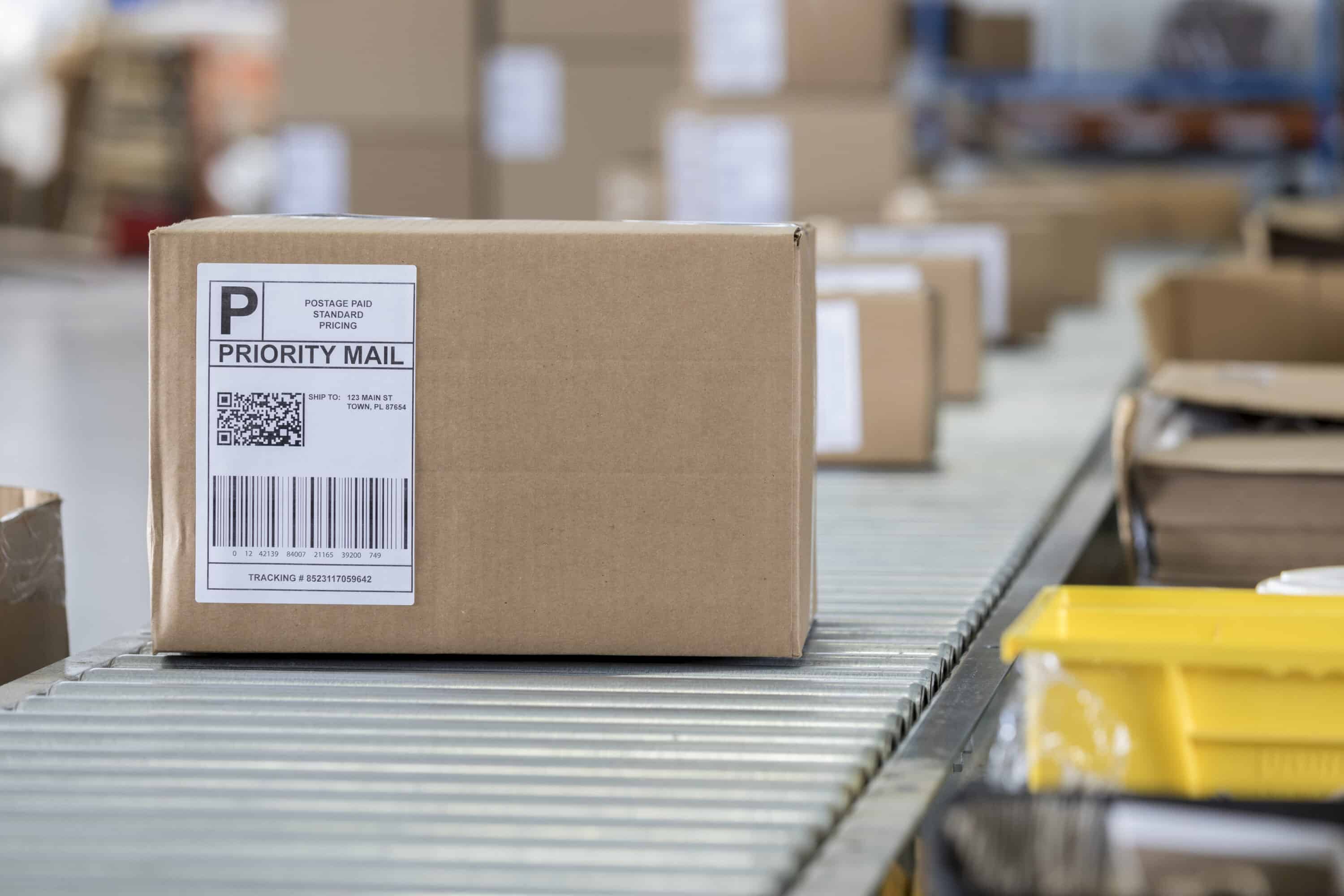
How does multi-carrier shipping software actually work?
Step 1: Orders flow into the platform from your ecommerce platform, OMS or WMS through API integrations, bringing together all the information needed to prepare each shipment.
Step 2: Scurri applies your configurable shipping rules to automatically select the most appropriate carrier service based on criteria such as destination, weight, service level, cost or other business requirements. Rules can be updated in real-time by your team whenever your delivery strategy changes, without raising a support request.
Step 3: Shipping labels, customs documentation and QR codes are generated in milliseconds using templates that meet each carrier’s specifications, helping warehouse teams process orders quickly and accurately.
Step 4: Tracking information is shared automatically with your systems and customers, while reporting dashboards provide visibility into shipment performance, carrier performance and shipping costs. Carrier rate cards can also be uploaded to support shipment-level cost calculations and optimise carrier selection.
For a UK enterprise retailer processing hundreds of thousands of orders a year, small percentage improvements in last mile performance translate into six- and seven-figure outcomes. That’s why this has moved from a warehouse conversation to a board conversation.
1. Diversify your carrier network and use it as commercial leverage
Relying on one or two carriers feels simpler to manage, but it removes your negotiating power and leaves you exposed if a carrier has a bad week. Enterprise retailers are increasingly building multi-carrier networks specifically so they can move volume when service or cost isn’t competitive.
Sports nutrition retailer Bulk did exactly this across its European operations. Previously reliant on a single carrier route via Germany, Bulk used Scurri Connect to diversify across multiple regional carriers, cutting a full day off EU delivery times and unlocking over £1 million in savings through stronger tender negotiations.
As Bulk’s Logistics Director put it: “If you’re locked in to a carrier utilising their API, carriers know it’s difficult for you to switch. But if you’ve got carrier management software like Scurri Connect which enables you to switch quickly, it adds impetus to those tender discussions.”
The takeaway for logistics decision-makers: carrier diversification is a cost-control strategy. The more credibly you can move volume away from an underperforming carrier, the stronger your position at the negotiating table.
2. Integrate delivery management software across your last mile network
For enterprise retailers operating their own multi-warehouse and delivery station network, the biggest operational bottlenecks are rarely physical, they are the data gaps between disconnected systems. When your ERP, WMS, and expanded carrier roster don’t sync in real time, you run straight into missed SLAs, manual exception handling, and terminal blind spots right when order volumes spike.
By sitting directly between your core warehouse management system and your final-mile carrier APIs, an integrated delivery management platform eliminates manual label reprocessing, automates carrier selection, and establishes full visibility across every node in your owned network.
3. Own your post-purchase communication to stop WISMO before it starts
Most WISMO queries aren’t caused by a delivery going wrong, instead they’re caused by the customer not knowing what’s happening. When tracking updates come from the carrier rather than the retailer, you lose the opportunity to manage the experience, reassure the customer and protect your support team’s time.
Menswear retailer Dobell used Scurri to bring branded tracking emails and timelines in-house. The result: 37% fewer support tickets per year and a 25% reduction in required support headcount, alongside a 57% click-through rate on post-purchase emails that’s now also driving repeat sales.
“Improving the customer experience is about having the right information and giving it to the customer at the right point of their journey, that’s what Scurri does,” said David Butcher, Operations, CS & Global Logistics Manager at Dobell.
Fragrance retailer The Perfume Shop saw a similar effect during peak trading: by controlling delivery communication and warehouse reliability through Scurri, the retailer cut the extra headcount it needed during Peak by 24%, even as order volumes grew.
4. Build peak and demand-volatility resilience into your network
Black Friday and Cyber Week used to be the only true stress-tests for last-mile infrastructure. Today, retail growth is defined by a growing calendar of seasonal “micro-peaks”, from Valentine’s Day to Father’s Day where sudden order spikes test system agility with zero warning.
When execution falters during these windows, the cost goes far beyond delayed parcels; it damages repeat purchase rates for months afterward. Scurri platform data highlights just how intense these mini-peaks have become, for example The Late-Shopper Crunch: Roughly 40% of consumers purchased gifts in the final three days before the occasion.
Key Takeaway: Building a resilient delivery network means engineering agility into everyday operations, well beyond Q4. Capturing late-demand sales during micro-peaks requires Saturday despatch, dynamic carrier switching, and automated rerouting the moment a carrier or fulfillment node shows strain.
5. Turn delivery data into continuous, board-level improvement
Enterprise retailers generate enormous volumes of delivery data, from carrier performance, delivery windows, exception rates, cost per shipment. The strategic advantage comes from acting on it, not just collecting it.
Bulk uses Scurri’s reporting dashboards to monitor carrier SLAs across its EU network on an ongoing basis, catching underperformance before it affects customers. The Perfume Shop has used similar visibility to drive operational decisions that go beyond delivery speed alone, including a 40% reduction in packaging that has cut both emissions and cost per shipment, and a “ship from store” model, facilitated by Scurri, that increased sellable inventory by 10%, with 18% of all orders now fulfilled this way.
That’s the shift enterprise retailers are making: from treating last mile data as an operational report to treating it as a source of ongoing commercial and sustainability improvement.

Turning last mile delivery into a competitive edge
For enterprise UK retailers, scalable last mile success hinges on four fundamentals: carrier flexibility, connected systems, owned communication, and rigorous data discipline. The retailers getting this right are turning what was once a cost centre into a measurable driver of growth, cost savings and customer loyalty.
See how it’s worked in practice for retailers like Bulk, Dobell and The Perfume Shop in our full case studies library, or book a consultation with our team to talk through your own last mile delivery strategy